
JC100 Wheel Skid Steer Loader
Wholesale JC100 flagship wheeled skid steer loader. Powered by 74.9kW Weichai WP4.1 engine, featuring 1200kg rated capacity, 0.6m³ bucket, and 18 km/h max speed.
Wholesale JC100 flagship wheeled skid steer loader. Powered by 74.9kW Weichai WP4.1 engine, featuring 1200kg rated capacity, 0.6m³ bucket, and 18 km/h max speed.
Wholesale JC120 ultra heavy-duty wheeled skid steer loader. Powered by 103kW Weichai WP4.1 engine, featuring 1500kg rated capacity, >32kN traction force, and 0.6m³ bucket.
Wholesale JC25 mini wheeled skid steer loader. Powered by Kubota D1105 engine (EPA Tier 4/Euro V), 380kg capacity, 920mm narrow width. Request a quote today!
Wholesale JC35 compact wheeled skid steer loader. Powered by 36.7 kW Xinchai engine, 500kg rated load, and 0.3m³ bucket capacity. Ideal high-value loader for developing markets.
Wholesale JC45 wheeled skid steer loader featuring a 700kg rated load, 0.4m³ bucket capacity, and 3080mm hinge pin height. Powered by a durable 36.7 kW Xinchai engine.
Wholesale JC50D ultra-low profile wheel skid steer loader. Features 1600mm ultra-low cab height, 850kg rated operating load, 45kW power, and 2810mm hinge pin height for restricted-height spaces.
Wholesale JC60 wheeled skid steer loader. Powered by 45kW Xinchai A498BPG engine, featuring 850kg rated operating load, 0.45m³ bucket capacity, and 3100mm lift height.
Wholesale JC65 heavy-duty wheeled skid steer loader. Powered by 55kW turbocharged engine, featuring 950kg rated load, 0.5m³ bucket capacity, and 20kN breakout force.
Wholesale JC75 heavy-duty wheeled skid steer loader. Powered by 55kW turbocharged engine, featuring 1050kg rated load, 3278mm hinge pin height, and 0.5m³ bucket capacity.
Discover the LY850 Compact Skid Steer Loader powered by a genuine Kubota D1105 engine. 400kg rated capacity, 0.2m³ bucket, EPA Tier 4/Stage V certified. Ideal for narrow spaces & landscaping.
Wholesale TS100 ultra heavy-duty compact track loader. Powered by 74kW Weichai WP4.1 engine, featuring 1200kg rated capacity, 12/18 km/h 2-speed system, and >30kN traction force.
Wholesale TS125 flagship compact track loader. Powered by 103kW Weichai WP4.1 engine, featuring 1500kg rated capacity, 12/18 km/h 2-speed system, and >32kN traction force.
Project delays, hydraulic thermal breakdown, and excessive undercarriage wear directly erode job site profitability. Fleet managers, civil contractors, and equipment rental firms face constant pressure to maximize total cost of ownership (TCO) while operating across grueling ground conditions. Our heavy-duty skid steer lineup delivers high-flow hydraulic performance, reinforced structural frames, and zero-turn agility designed to tackle extreme earthmoving, demolition, and material handling tasks. Partner with a direct-tier OEM manufacturer committed to lower operating costs, immediate global parts dispatch, and field-tested reliability.
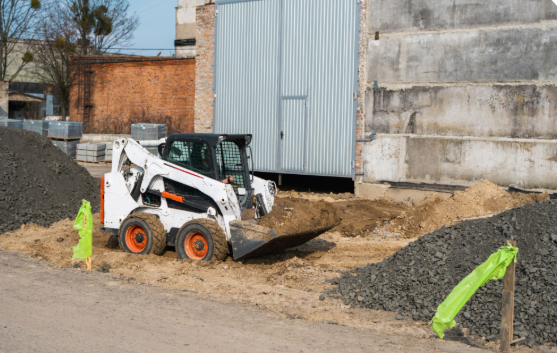
Matching the drive mechanism to ground pressure requirements and surface conditions is the primary technical variable in loader selection.
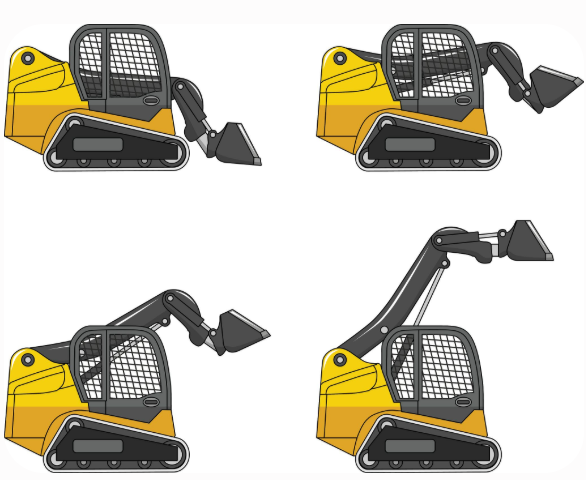
Lift arm geometry dictates force distribution across the elevation cycle, defining whether a machine excels at ground-level breakout or high-sided loading.
RADIAL LIFT PATH (Arc Trajectory)        VERTICAL LIFT PATH (Straight Upward)

        /-----> Maximum reach at         |      |----> Maximum reach at
       /        mid-height (flatbed)     |      |      full height (dump truck)
      /                                  |      |
     (                                   |      |
      \                                  |      |
       \                                 |      |
        X Ground level breakout          X------X Ground level vertical rise
The lift arm swings in a single continuous arc from ground level to maximum pin height.
Dual hydraulic linkages shift the lift arms forward as they rise, keeping the load path strictly vertical.
An ISO 24410-compliant quick-attach system converts a single power unit into an all-weather multi-tool system. High-flow hydraulic packages (up to 35+ GPM at 3,300 PSI) support demanding work tools.
Our machinery integrates tier-one global components housed inside high-strength steel fabrications.
| Engineering Metric | Compact / Light Duty | Standard Commercial | Heavy-Duty High-Flow |
| Operating Weight | 2,800 – 4,500 lbs (1,270 – 2,040 kg) | 6,200 – 7,800 lbs (2,810 – 3,538 kg) | 8,500 – 10,500 lbs (3,855 – 4,760 kg) |
| Rated Operating Capacity (ROC) | 900 – 1,350 lbs (408 – 612 kg) | 1,800 – 2,500 lbs (816 – 1,134 kg) | 3,000 – 4,200 lbs (1,360 – 1,905 kg) |
| Engine Output | 24.5 – 35 HP (18.2 – 26.1 kW) | 60 – 74 HP (44.7 – 55.2 kW) | 85 – 110 HP (63.3 – 82.0 kW) |
| Standard Hydraulic Flow | 12 – 15 GPM (45 – 57 L/min) | 18 – 22 GPM (68 – 83 L/min) | 24 – 28 GPM (91 – 106 L/min) |
| High-Flow Option | N/A | 30 – 33 GPM (113 – 125 L/min) | 35 – 42 GPM (132 – 159 L/min) |
| System Pressure | 2,900 PSI (200 bar) | 3,300 PSI (228 bar) | 3,500 PSI (241 bar) |
| Travel Speed (Max) | 6.5 mph (10.5 km/h) | 10.5 mph (16.9 km/h) | 12.0 mph (19.3 km/h) |
| Lift Trajectory | Radial | Radial / Vertical Options | Vertical |
By partnering directly with our OEM manufacturing facilities, commercial buyers bypass intermediary markups and gain access to dedicated enterprise engineering services.
Tipping load is the precise weight applied at the center of a standard bucket that causes the rear wheels or track rollers to lift off the ground. In accordance with ISO 14397 and SAE J818 standards, the Rated Operating Capacity (ROC) for a wheeled loader is strictly set at 50% of the tipping load, whereas for a tracked loader (CTL), it is set at 35% to 50% of the tipping load depending on configuration.
Standard flow hydraulics (18–22 GPM) adequately power mechanical tools and low-demand hydraulic attachments such as standard buckets, pallet forks, trenchers, and augers. High-flow hydraulics (30–42 GPM) are mandatory for continuous, high-load rotatory attachments like forestry mulchers, cold planers, rock saws, and large snow blowers to maintain attachment speed under heavy physical loads.
Wheeled skid steers feature lower maintenance costs, requiring routine tire rotation, tire pressure checks, and periodic drive chain tension adjustments inside the chain tanks. Compact track loaders (CTLs) demand daily track tension inspections, frequent undercarriage mud cleanout, and ongoing monitoring of drive sprockets, idlers, and bottom rollers, resulting in a higher overall maintenance cost per hour offset by enhanced traction capabilities.
Optimize your fleet performance with commercial-grade equipment built for heavy job-site demands. Contact our engineering team today to receive itemized wholesale pricing, custom configuration options, and global shipping estimates.